Wednesday, October 22, 2014

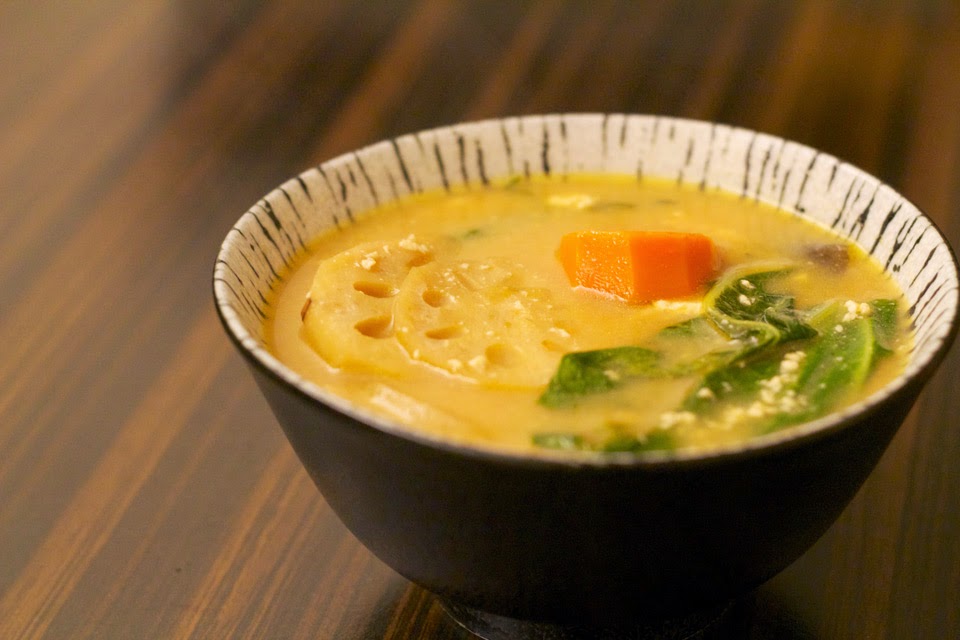
Kenchinjiru - Buddhist Soup

This recipe for vegetable soup comes from Kenchoji-ji Temple
There is a story behind the soup. It would appear that a temple acolyte dropped a block of tofu, shattering it to pieces. Instead of wasting it, he cooked it with some vegetables and the monks seemed to like it.

4-6 dried shiitake mushrooms (fresh are okay too)
5.5 oz gobo or Burdock root
2.5 cups water
10.5 oz daikon, peeled and cut to bite sized wedges.
1 block of konyaku, cut into bite sized pieces
7 oz carrots, peeled and cut into bite sized pieces
3-4 tablespoons sesame oil
3.5 oz lotus root, peeled and cut to bite sized pieces.
2 tablespoons shoyu for sautéing
2.5 cups konbu stock
4 tablespoons saké
1 block firm tofu
4 tablespoons shoyu for soup
2 tablespoons red miso or 3-4 tablespoons white miso, optional but recommended!
Handful of greens - baby spinach, collard greens, etc.
Small amount of ginger juice

Soak the shiitake in the water for 10 minutes. Drain. Soak for another 30 minutes in the 2.5 cups of water. Remove the mushrooms but keep the water as you will use it later. Remove the stalk and cut into bite-sized slices. Peel the gobo and cut into thin bite-sized slices. Soak them in cold water for 5 minutes to remove bitterness. Drain and put aside. Cut the daikon into bite sized pieces and soak in cold water for 10 minutes to remove bitterness.
Cut the konyaku into bite sized pieces and boil for a couple of minutes. Drain and remove.
Heat up the sesame oil in your soup pot (or in a separate pan) and stir fry the gobo, shiitake, konyaku, daikon, carrot, lotus root, and shoyu for around five minutes.
Add the shiitake water, konbu stock, and sake. Bring to a boil. Cook on low heat until vegetables are tender (30-45 minutes). If there’s any froth forming on the top, remove it with a spoon.
Crumble the tofu block into the pot and mix it in. Add the shoyu and miso. Stir gently for a while until you think the miso is dissolved. Add your greens and cook them lightly. Add a small amount of ginger juice to taste.
When you serve this, you can add a little more shoyu to individual bowls as well to taste.
Goes really well with a side of freshly cooked rice.
A lot of ingredients here, but the important thing to know is that you can substitute many of them.

Tampopo Special Ramen

"Lacking neither substance nor profundity".
This is not college dorm ramen. This, is the real deal. The recipe is from the movie Tampopo. If you haven't seen it you should. Very entertaining. I don't want to give spoilers. I have made this broth many times and it is as the old ramen master says in the movie..."Lacking neither substance nor profundity", meaning it is excellent and well balanced.
There is also sort of a "zen" to eating ramen the old master imparts. Most of the ingredients are easy to find, with duck wing and menma being the exception. Chicken wings work just as well, and menma is a bit of an acquired taste.

Broth:
2 pounds of pork bones
2 pounds chicken or duck wings, each bone cut in 2 or so pieces
3 Japanese long onions, a bunch of spring onions or a leek or 2, roughly chopped
Half a head of garlic, each clove cut in half
Konbu
1 Knob ginger, cut in 2-3 pieces
Salt
Enough water to cover all ingredients with a generous clearance

Pork:
3 pounds pork shoulder
1 cup soy sauce
1/2 cup sake
1/2 cup mirin
1 knob ginger, finely sliced
2 cloves garlic
1 bunch green onion, chopped

Other:
Negi (Japanese onion), sliced diagonally
Menma, this is fermented bamboo shoots (available at Asian markets)
Nori
Chuka soba (Chinese-style noodles)
Sesame oil
Soy sauce

Broth:
Place bones in a pot of water, bring to a boil and cook for 1-2 minutes. Drain and discard the water before rinsing bones under a cold tap. Combine bones with other ingredients and bring to a light simmer - never a boil, or the soup will cloud, keeping going, uncovered, for about seven hours. You will probably need to add a little water to keep your 1-2 inch buffer of water above the bones and other ingredients. Once it's done, strain it as much as possible, and either use it, keep it on the low fire for a day of running your ramen shop, or cool and refrigerate or freeze it.

Pork:
Brown the pork all over before simmering it over medium-low heat in a mixture of all the other ingredients for 1.5 hours. Let it cool. For classic ramen chashu, all you have to do is let it cool a bit and thinly slice it (about 4mm).
The braising liquid is great reserved.


Boil some water.
Heat bowls and put a few tablespoons of soy sauce (and a dash of the pork braising liquid if you have it) in the bottom of them.
Dice the pork and quickly stir-fry it with the sliced negi.
Meanwhile put the noodles into the boiling water for about 2 minutes and drain.
Ladle the broth into the bowls, followed by noodles and the negi/pork mixture. Add menma on the side and finish off with a drop of sesame oil over the pork. Done.

For more classic shoyu ramen, combine the soy in the bowls with broth, add noodles, serve with a strip of nori, thinly sliced pork, negi, menma and any other toppings you desire.

Baked Tonkatsu

A good and lower fat iteration of tonkatsu. You can also use pork chops.

3/4 cup panko breadcrumbs
1 tbsp. olive oil
2 pieces pork loin approximately 1/2 lb
1 tsp. salt
Freshly ground black pepper
2 tbsp. all-purpose flour
1 large egg
Tonkatsu Sauce
1 tbsp. black and/or white sesame seeds

Adjust an oven rack to the middle position and preheat the oven to 400
Combine the panko and oil in a frying pan and toast over medium heat until golden brown. Transfer panko into a shallow dish and allow to cool.
Get rid of the extra fat and make a couple of slits on the connective tissue between the meat and fat to prevent the tonkatsu from curling up.
Pound the meat with a meat pounder, or if you don’t have one then just use the back of knife to pound. Mold the extended meat back into original shape with your hands.
Sprinkle salt and freshly ground black pepper.
Dredge each pork piece in the flour to coat completely and pat off the excess flour. Then dip into the beaten egg and finally coat with the toasted panko. Press on the panko flakes to make sure they adhere to the pork.
Place the pork on the prepared baking sheet. Bake until the pork is no longer pink inside, about 20 minutes.
Cut tonkatsu into 1 inch pieces by pressing the knife directly down instead of moving back and forth. This way the panko will not come off. Transfer to a plate and serve immediately. To make special sesame tonkatsu sauce, grind black and white sesame seeds in a suribachi or mortar and add tonkatsu sauce. Mix all together.

Tuesday, October 21, 2014

Potato Korokke

1 lb potatoes
1 tsp. oil
1/2 lb ground beef
1/2 onion, minced
1/4-1/2 tsp salt
Pepper
Flour/Eggs
Panko bread crumbs)
Oil for deep frying
Bulldog Tonkatsu sauce

Peel potatoes and cut into 4 pieces each. Cook in boiling water until soft. In a big bowl, mash potatoes well. Heat oil in a pan, and start cooking onion. Then add ground beef and cook until browned and cooked through. Season with salt and pepper. Mix potatoes and meat mixture and add some more salt and pepper to taste. Let it cool. Divide potato mixture into 8 pieces and make oval patties. Refrigerate for an hour. Coat with flour, then eggs, and finally Panko bread crumbs. Heat deep frying oil to 350-375, and fry the patties for 3-4 minutes each side.

Showa-era Retro Style - Old Fashioned Japanese Spaghetti Napolitan

Dry spaghetti
4 frankfurters or ham
1 large bell pepper
5-6 button mushrooms
2 tbsp. butter
1 medium onion
Salt and pepper
1/2 cup ketchup
2 tbsp. Bulldog Tonkatsu sauce

Boil the spaghetti while you’re cooking the other ingredients in plenty of salted water. Cook it a minute or two beyond the al dente stage for authenticity. Slice the onion, pepper and mushrooms thinly. Slice the sausages or ham in thin, diagonal slices.

Heat up a wok or large frying pan with the butter or oil or a combination. Incidentally, using lard here would make it closer to the original version. Cook the onion until transclucent, then add the peppers and mushrooms for a few minutes. Add the sausage slices and sauté until lightly browned. Season lightly with salt and pepper. In the meantime, combine the ketchup, Bulldog sauce in a small bowl.
Drain the spaghetti once it’s cooked. Add to the pan. Add the sauce mixture and toss well to combine. Serve immediately, optionally topped with plenty of grated cheese, and/or a dash of Tabasco.

Hiyayakko

1 package (12 oz) silken tofu
1 scallion, finely chopped
1 small thumb size ginger, peeled and grated
Bonito flakes (katsuobushi)
Shoyu

Take tofu out of the package and drain. Cut the tofu in 1/2 or 1/3. Plate the tofu and add some scallions, a little freshly grated ginger and sprinkle some katsuobushi flakes. Pour a little shoyu on and serve.